
The Art of Decision-Making in I Ching: Perceiving Timing and Positioning
In our rapidly changing modern society, we constantly face choices: whether to change jobs, accept a new collaboration, or continue a relationship. The I Ching offers a timeless framework for decision-making. Its aim is not to “predict the outcome,” but to help us see the situation more clearly, understand our role, and steady our mind so that we can make choices we are less likely to regret. This wisdom is built on a deep understanding of two core elements.
Read More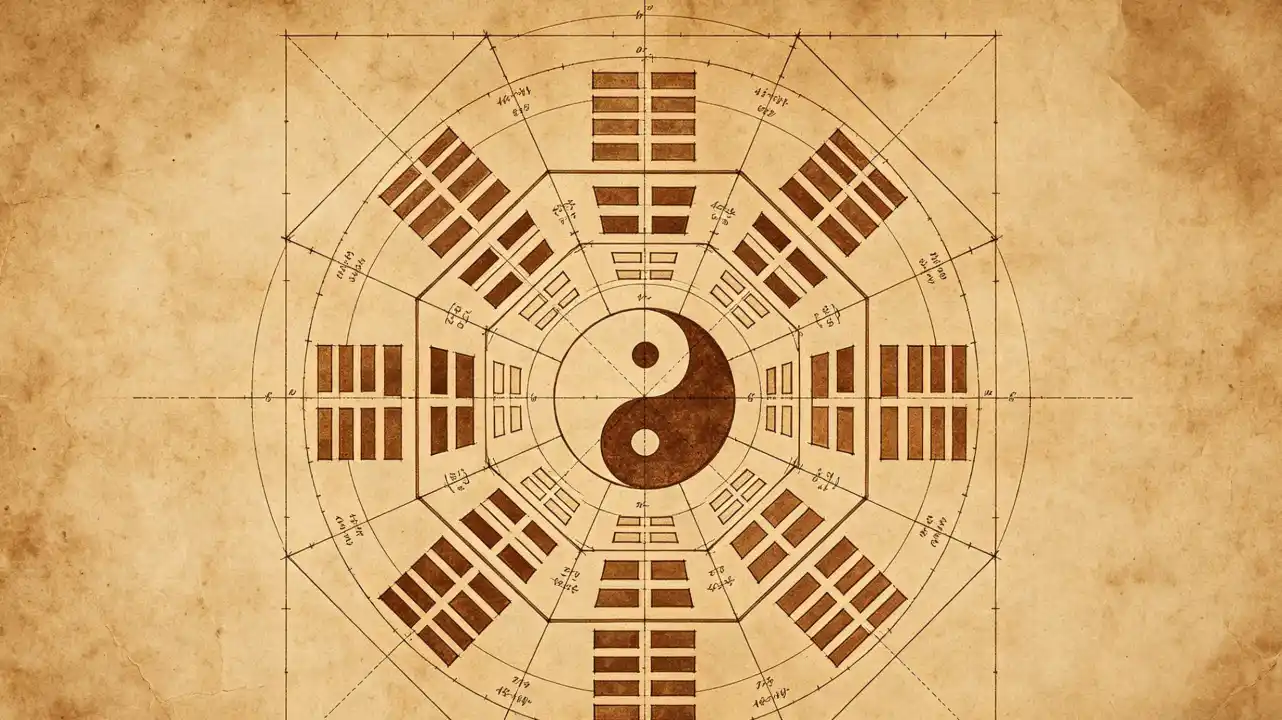
The Framework of I Ching: A Precise System of Symbols and Text
The wisdom of the I Ching is transmitted through an ingenious system of symbols and text. This system is hierarchically structured, forming a unique cognitive framework. From a textual perspective, the Book of Changes (Zhouyi) consists of two major parts: the “Classic” (Jing) and the “Commentaries” (Zhuan). The Classic is made up of the names, hexagram statements, and line statements of the sixty-four hexagrams, and originally served mainly for practical divination. The Commentaries are ten later exegetical texts attached to it, which further elevate these symbols and texts into a philosophy of the cosmos and human life. In this sense, the I Ching is both a book of divination and a book of reflective thought.
Read More